Hawaii's Kilauea Volcano Erupts, Sending Lava Fountains 200 Meters Into Air
Kilauea volcano on Hawaii's Big Island erupted Thursday morning, producing massive lava fountains and prompting closure of Hawaii Volcanoes National Park.
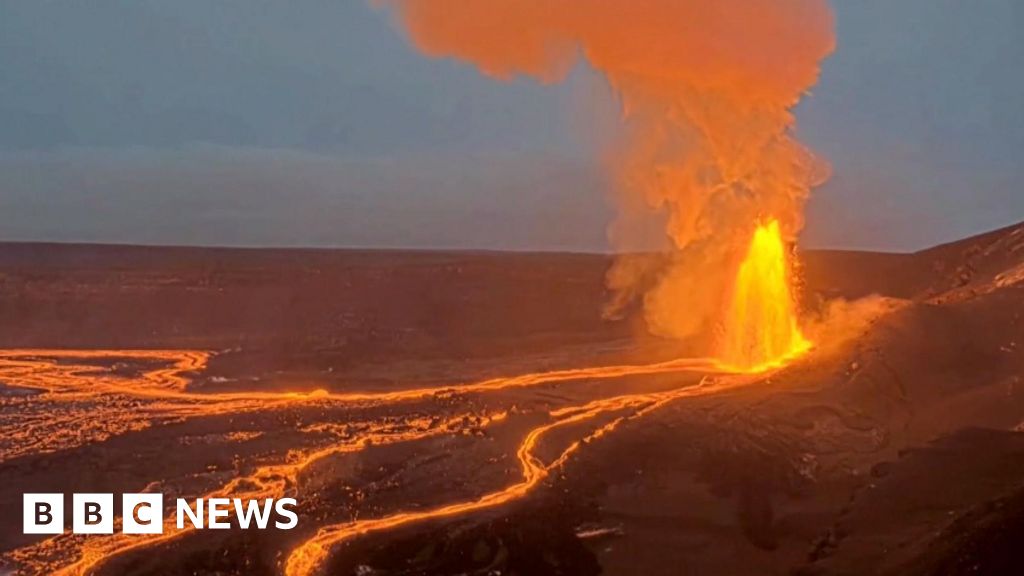
Kilauea volcano on Hawaii's Big Island erupted Thursday morning, sending lava fountains more than 200 meters into the air and prompting authorities to close Hawaii Volcanoes National Park.
Lava fountains began erupting from the volcano after 11 a.m. local time, according to the United States Geological Survey (USGS). The eruption produced dramatic displays of amber-colored lava shooting skyward from the volcanic crater.
By Thursday evening, plumes of smoke and streams of lava flowing downslope were visible on livestream cameras monitoring the volcano. The USGS reported that the current episode has produced approximately 3.6 million cubic yards of lava.
Kilauea is recognized as one of the world's most active volcanoes and has been erupting intermittently since December 2024. The volcano is located within Hawaii Volcanoes National Park on the Big Island, which was closed to visitors due to the ongoing volcanic activity.
The USGS continues to monitor the eruption and assess volcanic hazards in the area. Kilauea's frequent volcanic activity makes it a closely watched geological feature, with scientists tracking its behavior to understand volcanic processes and potential risks to nearby communities.