Google Unveils New AI Chips and Enterprise Tools as Competition with OpenAI Intensifies
Google announced new Tensor Processing Units and enterprise AI tools, while OpenAI released an open-source privacy filter model.
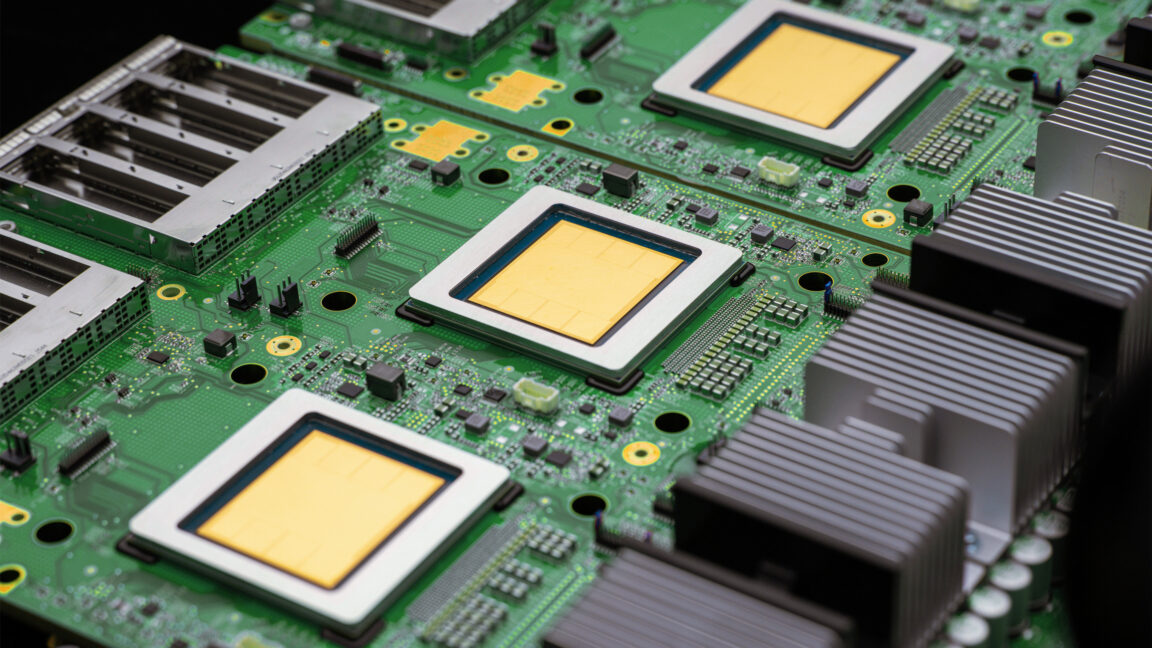
Google has unveiled its eighth-generation Tensor Processing Units, marking a strategic shift toward specialized AI chips designed for different workloads. The company introduced two distinct processors: the TPU 8t for model training and the TPU 8i for inference and real-time applications like AI agents.
The TPU 8t delivers 2.8 times the computational performance of its predecessor and can scale clusters beyond one million chips for large training jobs. The TPU 8i shows more dramatic improvements, offering 9.8 times the performance and 6.8 times the memory capacity of the previous generation, with architecture specifically optimized to reduce latency for AI agent applications.
Google's vertical integration strategy allows it to avoid paying margins to external chip suppliers like Nvidia, which competitors such as OpenAI and Anthropic depend on for their AI infrastructure. The company designs its entire AI stack from energy systems to software, potentially providing cost advantages in AI model deployment.
Separately, Google announced new enterprise AI features, including AI-powered browsing capabilities for Chrome and meeting transcription tools that work with in-person meetings as well as virtual ones. The company also launched the Gemini Enterprise Agent Platform for building custom AI agents.
Meanwhile, OpenAI released Privacy Filter, an open-source model designed to detect and remove personally identifiable information from datasets before they reach cloud servers. The 1.5-billion parameter model can run on standard laptops and uses a bidirectional approach to better understand context when identifying sensitive data.
The developments reflect intensifying competition in enterprise AI tools and infrastructure, as major tech companies race to capture business customers seeking to deploy AI agents and other advanced applications while maintaining data security and compliance requirements.