Fossil analysis reveals 60-foot octopus lived during age of dinosaurs
Scientists analyzing fossilized jaws discovered evidence of massive octopuses that hunted in ancient seas alongside dinosaurs.
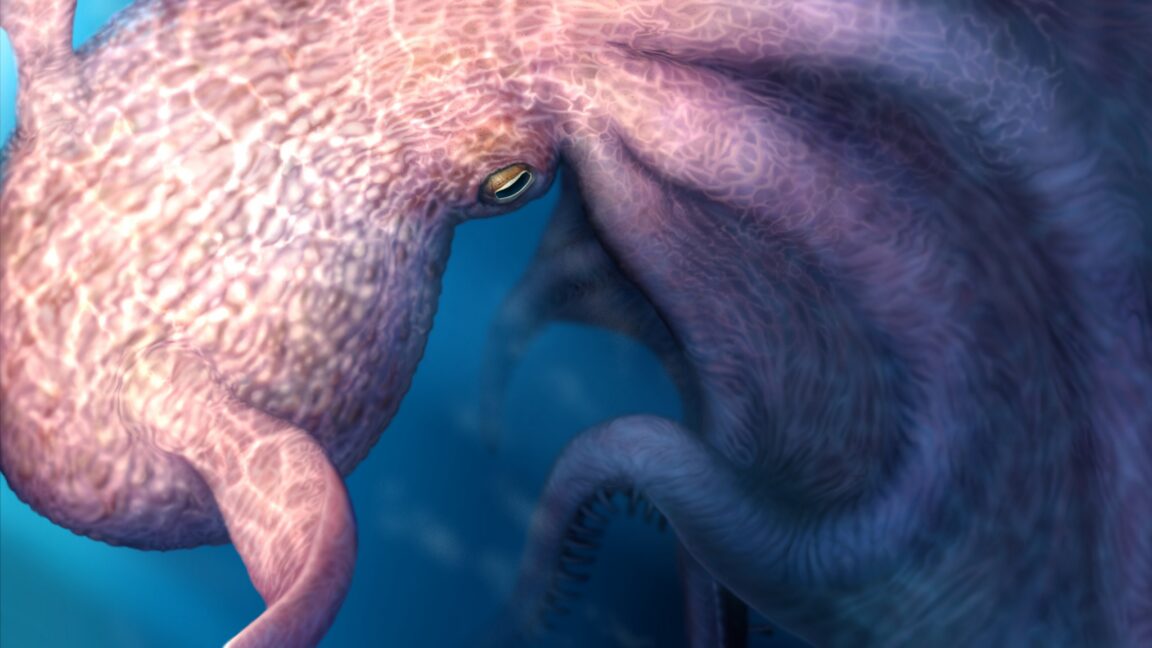
Scientists have discovered evidence of massive octopuses measuring up to 60 feet in length that lived during the Cretaceous period alongside dinosaurs, according to new fossil analysis.
Researchers conducted detailed examinations of fossilized jaw remains to reveal the existence of these ancient marine predators. The creatures, described as kraken-like in size and appearance, would have been among the largest cephalopods ever to exist.
The fossils indicate these giant octopuses shared the ancient seas with other well-known marine predators of the era, including mosasaurs. The Cretaceous period, which lasted from approximately 145 to 66 million years ago, was known for its diverse array of large marine reptiles and other sea creatures.
The discovery was made through layer-by-layer analysis of the preserved jaw specimens, allowing scientists to reconstruct the size and characteristics of these prehistoric cephalopods. The research provides new insights into the marine ecosystems that existed during the age of dinosaurs.
The findings add to the growing understanding of how diverse and complex ancient marine food webs were during the Cretaceous period, when both dinosaurs dominated the land and massive sea creatures ruled the oceans.